
Understanding the Real Lifetime of a Crane
A crane is not designed for unlimited use.
Its structural components and mechanisms are engineered for a finite working life, defined not by calendar years, but by operational usage.
This concept is known as the Design Working Period (DWP).
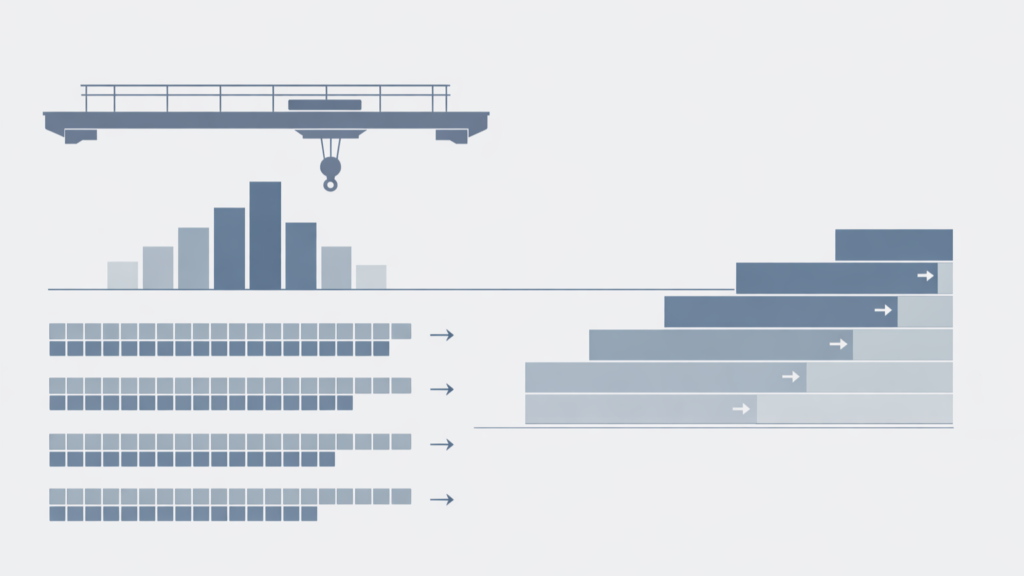
Lifetime Is Measured in Cycles, Not Years
It is common to associate equipment lifetime with calendar age. However, for cranes, service life is governed primarily by:
- Number of operating cycles
- Magnitude of lifted loads
- Load spectrum characteristics
- Duty class of operation
A crane operating intensively for five years may reach its design working period earlier than a lightly used crane operating for twenty years. Time alone does not determine structural exhaustion.
DWP and Structural Fatigue
Repeated loading introduces cyclic stresses in:
- Main girders
- Welded joints
- Connections
- Load-bearing components
Over time, these stress cycles accumulate fatigue damage.
DWP represents the design assumption regarding how much cumulative damage the structure can safely sustain before requiring reassessment. It is therefore a fatigue-based lifetime concept.
Relationship to Standards
Design Working Period is defined within international crane standards and is linked to:
- Crane classification
- Expected number of cycles
- Load spectrum categories
The initial design phase establishes the target DWP based on the intended operational duty. Once the crane approaches this limit, further evaluation becomes necessary.
What Happens When DWP Is Reached?
Reaching the Design Working Period does not automatically mean the crane must be scrapped. Instead, it indicates that:
- The original design assumptions have been fulfilled
- A professional assessment is required
- Remaining life must be evaluated
This evaluation considers real operational data rather than design assumptions alone.
Why DWP Monitoring Is Important
Ignoring DWP may lead to:
- Undetected fatigue damage
- Increased risk of structural cracking
- Reduced reliability of components
- Unexpected downtime
Proactive DWP assessment supports safe operation, maintenance planning and investment decisions.
Conclusion
Design Working Period defines the intended fatigue life of a crane based on operating cycles and load spectrum, rather than calendar age. It reflects the cumulative structural demand experienced during service.
Once the initial DWP is reached, a structured evaluation of actual usage and remaining fatigue capacity becomes essential to ensure continued safe operation.
EngiSnap supports crane owners and operators with professional Design Working Period evaluation and remaining life assessment tailored to real operational conditions. Learn more about this service here.