
Compliance in crane engineering does not end with structural verification. Even a correctly designed crane can become unsafe if operational limits, inspection routines, and usage assumptions are not properly defined and maintained.
This is why safety, inspection, and use standards form a critical part of the overall crane regulatory framework.
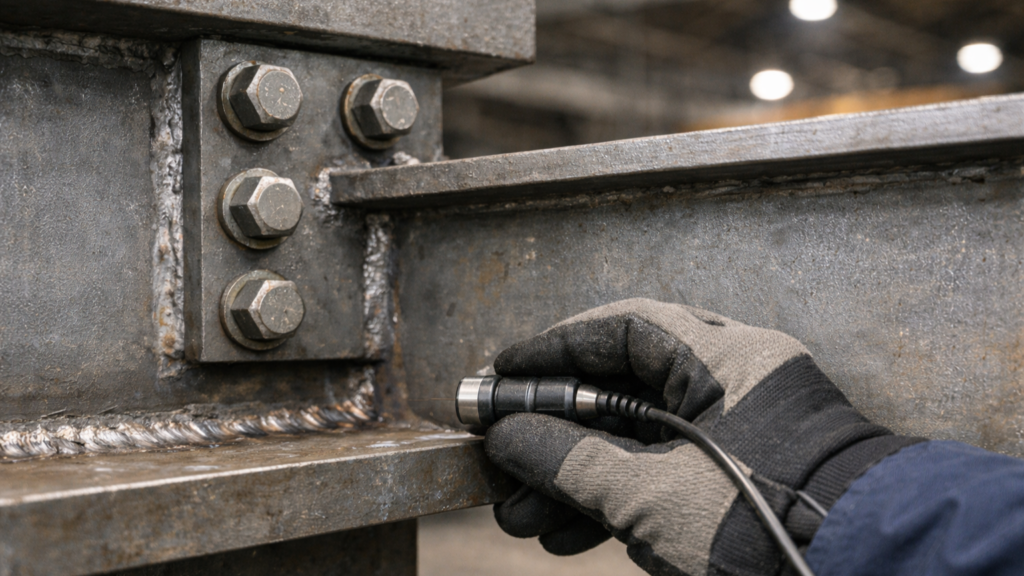
Why safety and use standards matter in crane projects
Design standards define how a crane should perform. Safety and use standards govern how it actually performs in operation.
They address:
- acceptable operating practices,
- inspection and maintenance requirements,
- responsibilities of owners, operators, and inspectors,
- conditions under which a crane may continue operating.
Without this layer, design assumptions quickly lose validity over time.
The scope of safety and inspection standards
Safety and use standards typically focus on:
- operational limits and safe working practices,
- inspection intervals and procedures,
- monitoring of degradation and damage,
- documentation and traceability.
Rather than prescribing design calculations, these standards ensure that:
- deviations are detected early,
- risks are managed systematically,
- and unsafe conditions are addressed before failure occurs.
Key international safety and inspection frameworks
Across different regions, several widely recognized standards govern crane safety and use.
These include:
- OSHA regulations, defining minimum safety requirements in occupational environments,
- ASME B30, covering safe operation and inspection of cranes and hoisting equipment,
- ISO standards, such as ISO 12482, addressing monitoring of crane design working periods,
- National safe-use standards, including AS and CSA series documents.
While their legal status may differ, their engineering intent is broadly aligned.
Inspection as a lifecycle activity
Inspection is not a one-time event. Safety standards typically distinguish between:
- initial inspections,
- periodic inspections,
- exceptional inspections after incidents or modifications.
These activities are essential for:
- validating original design assumptions,
- detecting fatigue damage and wear,
- assessing whether continued operation remains acceptable.
Inspection outcomes often drive decisions on repair, reinforcement, or operational ограничения.
The link between inspection and design assumptions
A recurring challenge in crane projects is the disconnect between:
- how a crane was designed to operate,
- and how it is actually used.
Safety and inspection standards help bridge this gap by:
- requiring documentation of usage,
- enforcing inspection based on operational severity,
- and triggering reassessment when conditions change.
This link is particularly important for cranes operating beyond their originally intended duty class.
Common gaps in safety and use compliance
Across projects, several patterns frequently emerge:
- inspection routines treated as formalities,
- operational changes not reflected in documentation,
- unclear responsibility between owner and operator,
- safety standards applied independently of design assumptions.
These gaps rarely indicate lack of standards, but rather fragmented application.
The EngiSnap perspective
From a consulting standpoint, safety and inspection standards are not separate from design.
They are a continuation of the same engineering logic across the crane lifecycle.
Our focus is on:
- aligning safety requirements with original design assumptions,
- supporting inspections with engineering assessment,
- and ensuring that operational decisions are technically justified.
Effective crane safety is achieved through continuity, not through isolated compliance checks.